

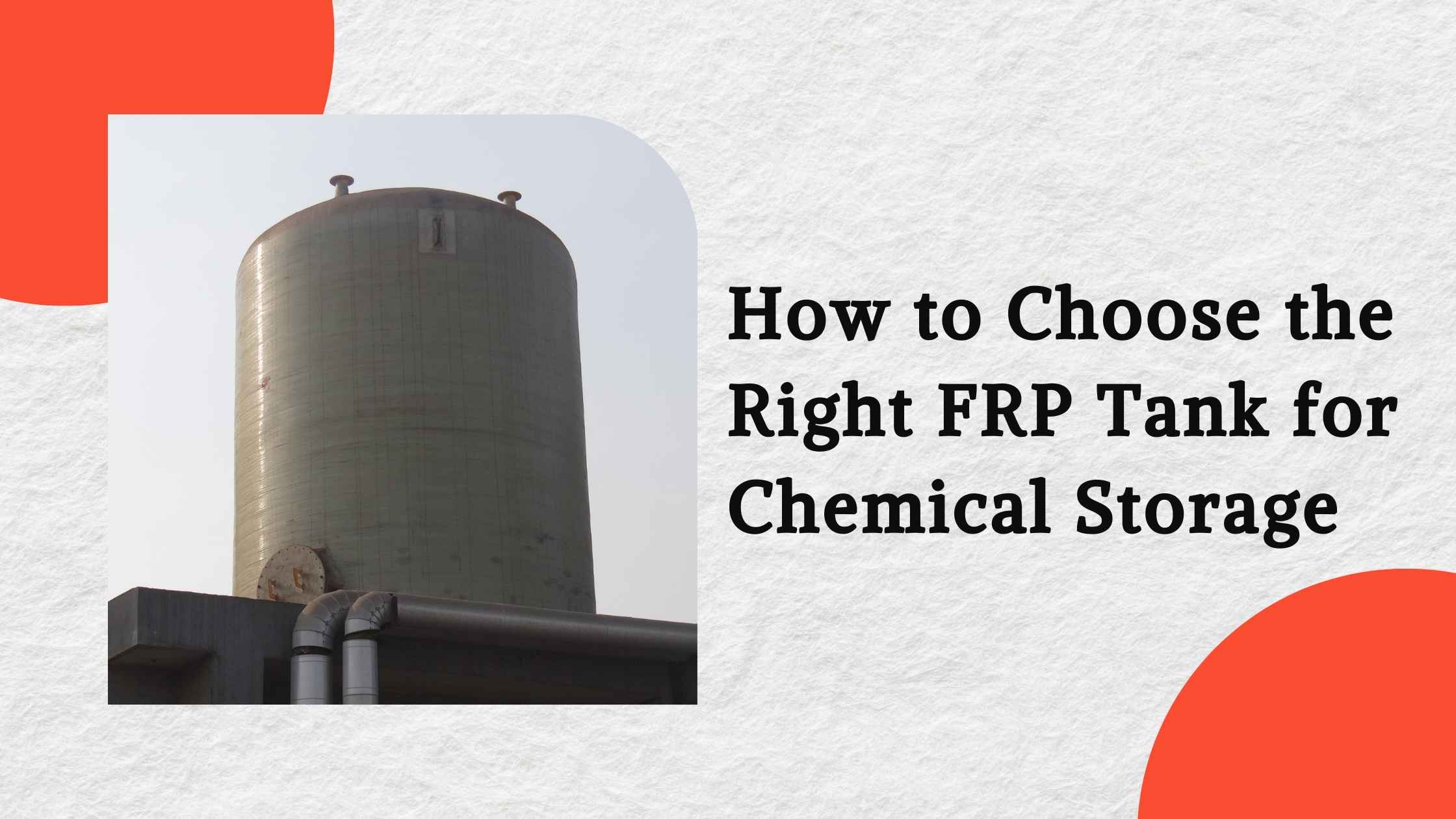
When it comes to storing chemicals safely and efficiently, Fiberglass Reinforced Plastic (FRP) tanks have become the industry standard. Their exceptional corrosion resistance, strength, and customizability make them a top choice across sectors like chemical processing, pharmaceuticals, water treatment, and more. However, selecting the right FRP tank for your application involves careful consideration of several critical factors.
Here’s a comprehensive guide to help you choose the right FRP tank for chemical storage:
1. Understand the Chemical Properties
Before selecting an FRP tank, it’s essential to know the exact type of chemicals you will store. Consider:
- Corrosiveness: Is the chemical acidic, alkaline, or neutral?
- Reactivity: Does it react with certain materials, temperatures, or other compounds?
- Toxicity & Volatility: Will the chemical emit vapors or require special ventilation?
Knowing this helps determine the right resin system (e.g., Vinyl Ester, Epoxy, or Polyester) to ensure compatibility and safety.
2. Define Storage Conditions
Environmental and operational conditions impact tank performance:
- Temperature Range: Choose tanks that can withstand high or low temperatures without degrading.
- Pressure/Vacuum: Some processes may involve pressurized or vacuum conditions requiring reinforced designs.
- Location: Will the tank be installed aboveground, underground, or overhead? This influences design and installation requirements.
3. Determine Capacity & Space
Tank size depends on your volume requirements, but you must also consider:
- Site dimensions and access space
- Transport restrictions (if the tank needs to be delivered pre-fabricated)
- Expansion needs (future capacity planning)
Custom-designed FRP tanks can be manufactured in a wide range of shapes (cylindrical, horizontal, vertical) and capacities (from a few kL to over 50kL).
4. Select the Right Resin and Laminate Structure
FRP tanks are made from layers of fiberglass and resin. The resin system plays a major role in chemical resistance and durability. Options include:
- Vinyl Ester Resin – Best for high chemical resistance
- Isophthalic Polyester Resin – Cost-effective and suitable for less aggressive chemicals
- Epoxy Resin – Excellent mechanical strength and adhesion
The internal lining or laminate thickness may also need to be customized based on the aggressiveness of the stored media.
5. Check for Regulatory Compliance
Ensure your FRP tank is designed in accordance with industry standards such as:
- ASTM D3299 (for filament-wound tanks)
- ASTM D4097 (for contact-molded tanks)
- IS/ISO standards for pressure and safety
Depending on the industry, certifications may also be needed for hazardous chemical storage or potable water compatibility.
6. Prioritize Manufacturer Expertise
Choosing a reliable FRP tank manufacturer is as important as the tank itself. Look for:
- Proven experience with chemical applications
- Ability to provide custom designs and testing
- After-sales support, including installation guidance and maintenance plans
At JM Zhongkai Chemical Equipment LLP, we’ve designed and delivered FRP tanks for some of the most demanding chemical applications across India, including 50kL underground tanks and 100% vacuum-rated vessels.
Conclusion
Choosing the right FRP tank for chemical storage isn’t just about selecting a product – it’s about investing in the safety, efficiency, and longevity of your operation. By understanding your chemical needs, storage environment, and working with a trusted manufacturer, you can ensure a system that delivers lasting performance and peace of mind.
Need expert guidance?
Reach out to JM Zhongkai for custom-engineered FRP tanks tailored to your process requirements.