

- Home |
- FRP PIPE & FITTINGS
FRP PIPE & FITTINGS
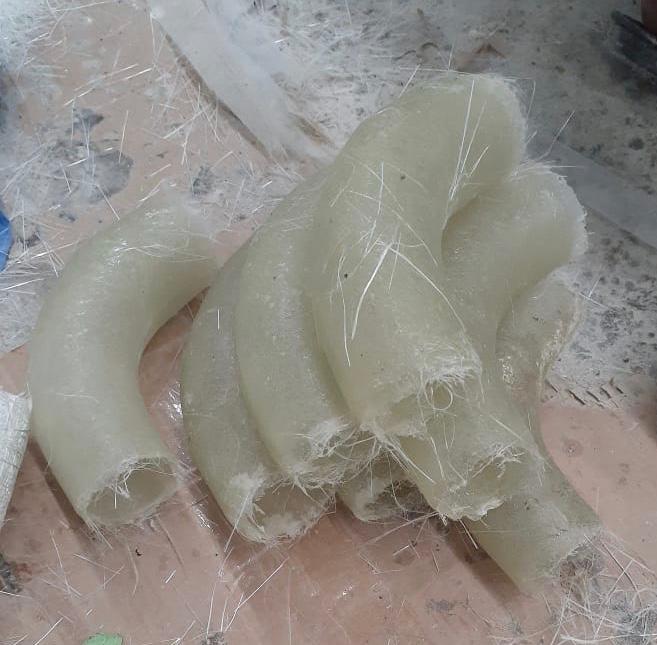
Corrosion-Resistant, Lightweight Piping Solutions for Demanding Industrial Applications
FRP (Fiber Reinforced Plastic) pipes and fittings are advanced composite components designed to meet the rigorous demands of industries where corrosion resistance, durability, and ease of installation are critical. Manufactured using high-performance thermosetting resins (such as polyester, vinyl ester, or epoxy) reinforced with fiberglass, these systems deliver exceptional mechanical strength with significantly reduced weight compared to traditional metal or concrete alternatives.
Key Features & Advantages
Superior Corrosion Resistance
FRP pipes and fittings are impervious to a wide range of chemicals, acids, alkalis, and saltwater, making them ideal for aggressive environments and chemical transport.High Strength-to-Weight Ratio
Despite being lightweight, FRP systems offer excellent mechanical strength, enabling easy handling, transportation, and installation without compromising structural integrity.Thermal & Electrical Insulation
Non-conductive by nature, FRP materials provide excellent thermal and electrical insulation, enhancing safety in electrically sensitive or high-temperature environments.Customizable Configurations
Available in various diameters, wall thicknesses, and pressure ratings, FRP pipes and fittings are fabricated using filament winding or hand lay-up methods, ensuring design flexibility and adherence to specific project requirements.Minimal Maintenance
With resistance to rust, scaling, and biological growth, FRP piping systems require less frequent inspections and lower upkeep costs over time.
Applications
FRP pipes and fittings are widely used across industries for transporting corrosive or sensitive fluids:
Chemical processing plants
Oil & gas pipelines
Water and wastewater treatment facilities
Power generation and cooling water systems
Desalination and marine applications
Pulp & paper industries
Product Range
JM Zhongkai Chemical Equipment LLP offers a complete range of FRP fittings, including:
Elbows (45°, 90°)
Tees and Crosses
Reducers (Concentric & Eccentric)
Flanges (Stub, Blind, Slip-on)
Couplings and End Caps
All fittings are manufactured to industry standards and can be customized to specific design parameters and connection types.
FAQs – FRP Pipes & Fittings
1. What are the main benefits of using FRP pipes over metal or concrete pipes?
Answer:
FRP pipes offer superior corrosion resistance, lighter weight, and lower maintenance requirements, making them more durable and cost-effective in corrosive or chemically aggressive environments.
2. Are FRP pipes suitable for high-pressure applications?
Answer:
Yes. FRP pipes can be engineered for various pressure ratings, depending on the resin type, wall thickness, and manufacturing method (e.g., filament winding). Custom designs are available for high-pressure systems.
3. Can FRP fittings be customized for unique piping layouts?
Answer:
Absolutely. JMZCEL offers fully customizable FRP fittings tailored to meet specific layout, flow, and dimensional requirements.
4. What is the typical lifespan of FRP piping systems?
Answer:
With proper installation and usage, FRP pipes and fittings can last 20 to 50 years or more, depending on the service environment and chemical exposure.
5. Are FRP pipes suitable for potable water applications?
Answer:
Yes. When manufactured with NSF-approved resins, FRP pipes are safe and compliant for drinking water systems and meet health and safety standards.
6. What maintenance is required for FRP piping systems?
Answer:
FRP systems require minimal maintenance, typically limited to periodic visual inspections and cleaning, thanks to their resistance to scaling, fouling, and corrosion.